Top 10 Buffing Blocks for Nails
We may earn a commission for purchases made using our links. Please see our disclosure to learn more.
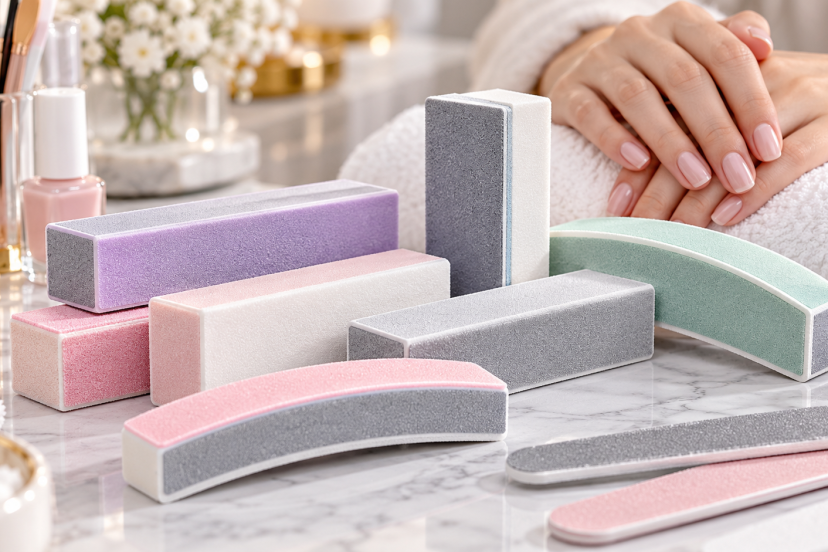
A rough nail surface can make even a carefully applied manicure look uneven. The right buffing blocks for nails help smooth minor ridges, refine the nail surface, prepare enhancements, and create a polished finish without turning nail prep into a complicated process. The catch is that nail buffers come in very different grits. A soft four-way buffer designed for natural nails serves a completely different purpose from a professional 100/180-grit sanding block. Below are 10 worthwhile options for different nail types, manicure routines, and experience levels.
Our Top Picks
| Product | Best For | Key Feature | Rating |
| Tweezerman Nail Buffer Blocks | Best Overall | Four-step color-coded system | ★★★★⯪ |
| Tweezerman Neon File, Buff, Smooth & Shine Block | Beginners | Replaceable four-step pads | ★★★★⯪ |
| Tropical Shine Mini 4-Way Nail Buffer | Travel | Compact four-sided design | ★★★★⯪ |
| ForPro Mini Buffing Block Gold 240/240 Grit | Gel & Acrylic Prep | Fine 240/240-grit surface | ★★★★⯪ |
| tenoverten The Buff Plus Clean | Natural Nails | Gentle manicure finishing | ★★★★★ |
| Tweezerman Glass Nail Buffer | Reusable Buffer | Durable glass construction | ★★★★⯪ |
| SEACRET Nail Buffer Block – 3-Way Salon Shine | Natural Shine | Three-step smoothing and polishing system | ★★★★⯪ |
| ForPro Super White Buffing Block | Professional Use | Salon-style block construction | ★★★★☆ |
| Tropical Shine Four Way Colossal Nail Buffer | Easy Handling | Oversized four-way design | ★★★★☆ |
| FANDAMEI Nail Buffer Kit | Complete Nail Prep | Multiple files and buffers | ★★★★⯪ |
Top 10 Buffing Blocks for Nails
1. Tweezerman Nail Buffer Blocks

Tweezerman’s Nail Buffer Blocks are an easy recommendation for natural nail maintenance because each side performs a clearly defined job. The four surfaces let you file the edge, buff the nail, smooth the surface, and finish with shine.
The color-coded and labeled sides remove much of the guesswork for beginners. Tweezerman also includes two buffers, making this a particularly convenient choice for routine at-home manicures. The manufacturer reports an overall rating of roughly 4.7 stars from more than 300 reviews on its own site.
Key features: Four-sided design, color-coded pads, file/buff/smooth/shine steps, two blocks
Best for: Everyday natural nail care
Pros: Very easy to use; gentle finishing system; recognizable brand; creates natural shine
Cons: Pads eventually wear down; unnecessary if you only need acrylic prep
Why we recommend it: It gives most home users exactly what they need without forcing them to understand complicated grit numbers.
2. Tweezerman Neon File, Buff, Smooth & Shine Block

This colorful Tweezerman buffer follows the same logical four-step approach but adds replaceable pads. Pink files, orange buffs, green smooths, and yellow creates the finishing shine.
Four replacement pads for each side are included, extending the useful life of the main block. Tweezerman currently reports an overall rating above 4.7 stars for this model.
Key features: Four nail-care stages, replaceable pads, color-coded surfaces
Best for: Beginners who want an easy step-by-step buffer
Pros: Clear directions; replaceable abrasive pads; comfortable block design
Cons: Replacement system is more involved than disposable blocks; relatively bulky
Why we recommend it: The labeled four-stage system is hard to misuse and makes achieving a natural shine straightforward.
3. Tropical Shine Mini 4-Way Nail Buffer

Tropical Shine’s Mini 4-Way Buffer packs several manicure steps into a small block that’s easy to keep in a cosmetic bag or travel nail kit.
Different surfaces let you gradually refine the nail rather than reaching immediately for an aggressive file. Its compact dimensions also make it easier to maneuver around shorter natural nails.
Key features: Four-way construction, compact size, progressive buffing surfaces
Best for: Travel and quick manicure touch-ups
Pros: Portable; multiple surfaces; inexpensive format; simple to use
Cons: Smaller gripping area; wears faster under frequent professional use
Why we recommend it: It’s a convenient choice when you want a traditional four-way buffer without carrying full-size manicure tools.
4. ForPro Mini Buffing Block Gold 240/240 Grit

ForPro’s Mini Buffing Block is aimed more at surface preparation than creating a glossy natural-nail finish. Its 240/240 grit provides a relatively fine abrasive surface for refining nails and manicure prep.
The small rectangular shape gives you useful control around sidewalls and shorter nail extensions. It’s also better suited to repeated manicure work than elaborate multi-stage polishing.
Key features: 240/240 grit, double-sided surface, compact professional design
Best for: Gel and acrylic manicure preparation
Pros: Controlled abrasion; compact size; useful for enhancement prep
Cons: Doesn’t provide multiple grit stages; not designed primarily for high shine
Why we recommend it: It offers a straightforward fine-grit surface for people who need preparation rather than a four-step natural nail polisher.
5. tenoverten The Buff Plus Clean

The Buff Plus Clean from tenoverten is a good fit for people who prioritize natural nail maintenance over aggressive enhancement filing. Its purpose is simple: refine nails as part of a clean, minimalist manicure routine.
That makes it particularly attractive if you’re trying to tidy your nail surface before clear polish, a sheer manicure, or going completely polish-free.
Key features: Natural nail focus, manicure finishing surface, streamlined design
Best for: Gentle natural nail maintenance
Pros: Simple to use; suited to minimalist manicures; good finishing option
Cons: Less appropriate for heavy acrylic shaping; premium positioning
Why we recommend it: It’s particularly well suited to users who want neat natural nails rather than aggressive filing power.
6. Tweezerman Glass Nail Buffer

Most traditional buffing blocks rely on abrasive paper attached to foam. Tweezerman’s Glass Nail Buffer takes a different approach, using a glass surface that feels more substantial and is intended for repeated nail-care use.
It makes sense for anyone tired of constantly replacing inexpensive foam buffers. The main tradeoff is that glass tools need more careful handling because dropping one onto a hard floor is considerably less forgiving.
Key features: Glass construction, reusable design, nail smoothing surface
Best for: Shoppers who prefer reusable nail tools
Pros: Durable surface; easy to clean; less disposable waste; premium feel
Cons: More expensive upfront; breakable if dropped
Why we recommend it: The reusable glass construction offers an appealing alternative to constantly replacing disposable sanding blocks.
7. SEACRET Nail Buffer Block – 3-Way Salon Shine

The SEACRET Nail Buffer Block uses a three-step system to smooth ridges, refine the nail surface, and create a glossy finish without polish. The pack includes two full-size buffers and is designed for both manicures and pedicures.
Key features: Three-way buffing system, ridge-smoothing surface, high-shine polishing side, pack of two
Best for: Natural nails and polish-free shine
Pros: Easy three-step process; smooths visible ridges; creates natural gloss; two buffers included
Cons: Coarse side requires gentle pressure; not intended for heavy acrylic shaping
Why I recommend it: It combines smoothing and high-shine polishing in one simple block, making it a strong choice for natural nail care.
8. ForPro Super White Buffing Block

The ForPro Super White Buffing Block has the familiar rectangular foam design commonly used during professional-style manicure preparation. Its larger surfaces make quick work of refining artificial nail material.
This isn’t the block I’d choose simply to add shine to delicate natural nails. For gel, acrylic, or extension work, however, the practical shape makes it much more useful.
Key features: Professional block shape, abrasive buffing surfaces, lightweight foam core
Best for: Salon-style manicure preparation
Pros: Large working surface; comfortable grip; straightforward design; suitable for artificial nails
Cons: Less versatile than four-way buffers; abrasive surfaces require careful pressure
Why we recommend it: It keeps professional nail preparation simple and provides plenty of usable surface area.
9. Tropical Shine Four Way Colossal Nail Buffer

Some tiny buffer blocks are surprisingly awkward to grip. Tropical Shine’s Four Way Colossal takes the opposite approach with a larger body that gives you more control during each buffing stage.
Four surfaces let you work progressively instead of using the same abrasive texture for everything. That makes it useful for natural nail maintenance and basic manicure finishing.
Key features: Oversized block, four-way system, multiple abrasive surfaces
Best for: Users who prefer a larger grip
Pros: Comfortable to hold; four manicure stages; easy surface identification
Cons: Takes more storage space; overkill for travel
Why we recommend it: The larger format is easier to control, particularly for users who dislike narrow files or miniature buffers.
10. FANDAMEI Nail Buffer Kit

FANDAMEI takes a different approach by combining buffer blocks with traditional files and other manicure-preparation tools. It’s a better choice for someone building a nail kit from scratch than someone replacing a single worn buffer.
The assortment also gives you options for different manicure stages. Pay attention to grit markings before working on natural nails, since coarse nail files intended for extensions shouldn’t automatically be used on the nail plate.
Key features: Multiple buffer blocks, nail files, different grit options, manicure tools
Best for: Building a complete nail-prep kit
Pros: Wide range of tools; useful for home manicures; handles multiple prep jobs
Cons: More tools than basic users need; grit selection requires attention
Why we recommend it: The variety makes it useful for users who need filing, preparation, and buffing tools in one purchase.
How to Buff Nails Without Overdoing It
Use light pressure and keep the buffer moving. You don’t need to grind away every visible ridge to prepare a nail successfully.
Buffing too aggressively or too frequently removes layers of the nail plate and can leave nails thin and flexible. This matters even more after gel removal. The site’s guide to removing gel nail polish without damaging your nails recommends using a soft buffer only when needed to remove remaining residue rather than aggressively filing the nail surface.
If your natural nails already feel thin, weak, or tender, skip unnecessary surface buffing until they improve.
Final Thoughts
The best buffing blocks for nails depend on what you’re trying to accomplish. For an easy all-around natural nail buffer, Tweezerman Nail Buffer Blocks stand out because their labeled four-step system makes shaping, smoothing, buffing, and shining straightforward. For gel or acrylic preparation, a dedicated block such as the ForPro Mini Buffing Block offers more practical surface refinement. Whatever you choose, use gentle pressure and match the grit to the job—good nail prep should smooth the surface, not thin the nail.
FAQs
What grit buffing block is best for natural nails?
Natural nails generally benefit from finer, gentler abrasive surfaces. Avoid using very coarse files across the nail plate unless the product specifically indicates that the surface is suitable for natural nails.
What is a buffing block used for?
A buffing block can smooth minor surface unevenness, refine the nail during manicure preparation, remove small amounts of leftover product, or polish natural nails to a shine. The exact purpose depends on its grit.
Can buffing blocks damage natural nails?
Yes, especially when they’re too coarse or used aggressively. Excessive buffing removes layers of the natural nail plate and may leave nails thin, flexible, or sensitive.
Should you buff nails before gel polish?
Light buffing may be part of some gel-polish preparation routines because it can remove surface shine and help prepare the nail. Follow the instructions for your specific gel system and avoid unnecessary filing.
How often should you use a nail buffing block?
There isn’t a universal schedule. Buff natural nails only when needed and avoid repeatedly thinning the same area. People who regularly wear gel or acrylic products may use buffers more often during application and removal, but the grit should always match the task.