12 Abstract Nail Art Ideas
We may earn a commission for purchases made using our links. Please see our disclosure to learn more.
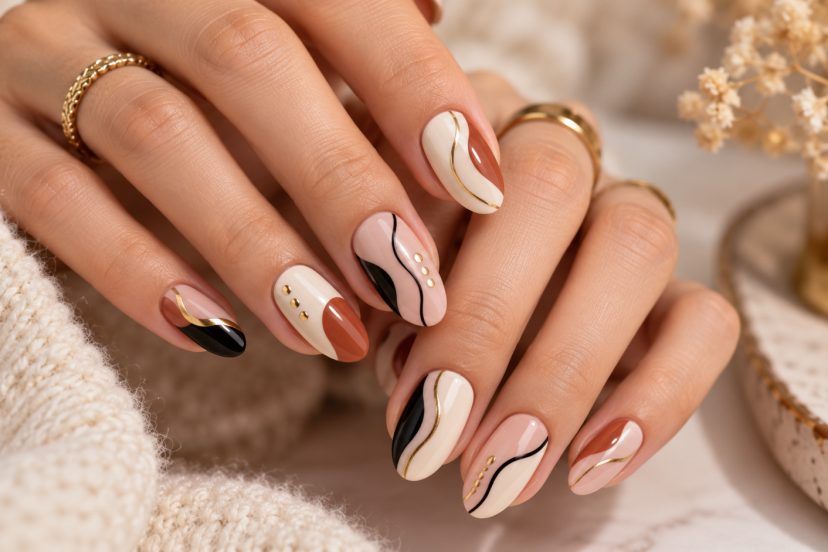
Perfectly matching nails can look beautiful, but sometimes a manicure is more interesting when the lines bend, the colors overlap, and no two nails look exactly alike. That freedom is what makes abstract nail art so much fun.
Instead of trying to paint tiny realistic flowers or perfectly straight patterns, you can work with loose curves, dots, blocks of color, brushstrokes, and open space. A small wobble rarely ruins the design. In many cases, it actually makes the manicure look more artistic.
Whether you prefer barely-there neutrals or bright color combinations, these 12 ideas give you plenty of room to make the look your own.
12 Abstract Nail Art Ideas to Try
1. Colorful Wavy Lines
Loose waves are one of the easiest ways to try abstract nail art. Start with a sheer nude, milky white, or pale pink base, then paint thin curves across each nail.
Try cobalt blue with orange for something bold, or combine sage, cream, and soft brown for a quieter palette. Let the placement change slightly from nail to nail rather than copying one exact pattern.
A long liner brush makes sweeping curves easier to control.
2. Minimal Black Line Art
You don’t need several colors to create an interesting manicure. Thin black lines over a nude base can look clean, artistic, and surprisingly polished.
Draw curved lines, incomplete circles, small loops, or simple overlapping shapes. Leave plenty of the base visible so the design doesn’t feel crowded.
This style works especially well on short nails because the artwork stays light and uncluttered.
3. Pastel Color Blocks
Paint irregular sections of lavender, peach, mint, yellow, or baby blue across different areas of each nail. Keep the edges rounded instead of making every section perfectly geometric.
A small palette of just a few colors can keep the design balanced without making it feel too busy. You can also outline one block with a fine white or black line to give the manicure more definition.
For a softer finish, choose colors with similar intensity rather than mixing very pale shades with extremely bright ones.
4. Abstract Dots and Spots
Dots may be simple, but their placement changes everything.
Create clusters of different-sized dots instead of arranging them in straight rows. Add tiny spots beside larger circles or let a few dots overlap painted curves.
A dotting tool gives you more consistent circles, although the rounded end of a bobby pin can work for a quick DIY manicure.
5. Negative Space Shapes
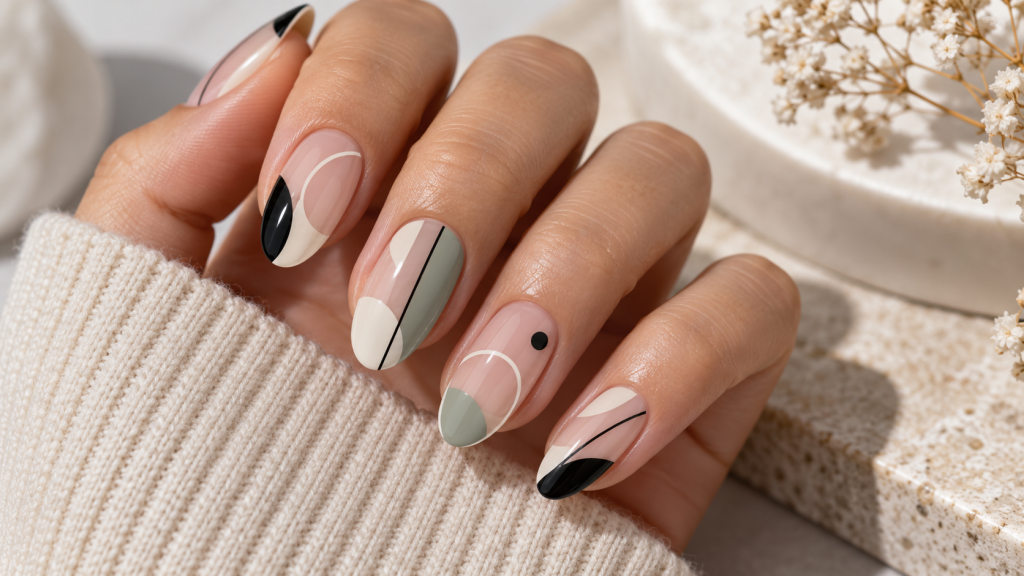
Negative space uses your natural nail as part of the artwork.
Try painting a curved section along one side while leaving the opposite side clear. You could also add floating circles, uneven half-moons, or small blocks of color surrounded by bare nail.
Using a transparent base coat first gives the unpainted areas a smoother, more finished appearance.
6. Terrazzo-Inspired Nails
Terrazzo patterns are perfect when you want something playful without needing much precision.
Begin with a pale base such as cream, beige, or blush. Add tiny irregular fragments in three or four contrasting colors. Keep the pieces uneven and scatter them in different directions.
Black or metallic flecks can add a little extra contrast without overpowering the softer shades.
7. Metallic Brushstrokes
A small amount of gold or silver can completely change an abstract manicure.
Paint irregular metallic strokes over a neutral base, or place metallic accents between blocks of darker colors. The shapes don’t need crisp edges; slightly rough brushstrokes often create a more artistic effect.
For something dramatic, pair gold with burgundy, forest green, navy, or black.
8. Abstract French Tips
The classic French manicure becomes much more interesting when you stop trying to make every tip identical.
Replace the usual white arc with slanted sections, double curves, waves, or two-color tips. One nail might feature a rounded tip while another has a diagonal block.
Keeping the same color palette across all ten nails prevents the mismatched shapes from feeling random.
9. Mismatched Graphic Nails
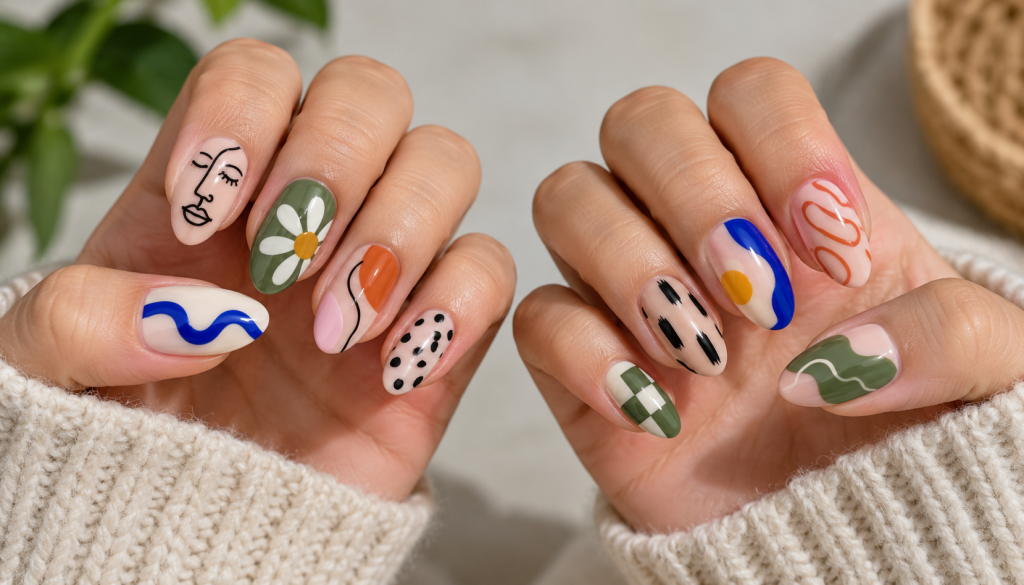
Can’t choose between stripes, dots, swirls, and color blocks? Use all of them.
Give every nail a slightly different graphic design while repeating the same three or four colors throughout the manicure. For example, combine pink, burgundy, cream, and orange across dots, curved lines, and checkerboard accents.
A limited palette is the trick that makes mismatched nails look coordinated.
10. Soft Watercolor Shapes
Watercolor-inspired nails trade crisp borders for blurred, dreamy shapes.
Use sheer polish in pink, lilac, blue, or coral and build the color in thin, overlapping patches. The shapes should look slightly translucent rather than completely opaque.
A few tiny gold details or fine white lines can add contrast without taking away from the soft effect.
11. Checkerboard and Curved Lines
Traditional checkerboard patterns can feel quite structured, but pairing them with loose curves creates a more playful design.
Try a small checkerboard section on two accent nails, then use wavy lines or irregular color blocks on the others.
You don’t need perfect squares either. Slightly distorted blocks fit the abstract theme better than ruler-straight edges.
12. Matte Abstract Nails
A matte top coat can make familiar abstract patterns look completely different.
Earthy shades such as rust, olive, tan, black, and cream work especially well with this finish. Paint rounded shapes, thin lines, or uneven blocks, then seal everything with matte top coat.
You can even leave one small detail glossy for a subtle contrast in texture.
Recommended Products
1. Artdone 31-Piece Nail Art Brush and Dotting Tool Set – This larger tool set gives you liner brushes, painting brushes, and dotting tools in one kit.
2. Saviland 6-Piece Nail Art Liner Brush Set – Long liner brushes make flowing curves and thin graphic lines much easier to paint.
3. Beetles 20-Color Gel Nail Polish Set – A varied color set is handy for abstract manicures because you can experiment with contrasting palettes without collecting individual bottles one at a time.
4. modelones Gel Base and Top Coat Set – A clear base provides a smoother starting surface, while top coat helps protect fine lines and layered artwork after you’ve finished the design.
5. Sally Hansen Double Duty Base & Top Coat – If you prefer traditional nail lacquer instead of gel, this clear product can work as both a base and finishing coat.
If you enjoy experimenting with creative manicures, you can also browse these unique nail art ideas for more ways to play with color, texture, and unexpected details.
A Quick Note About Nail Safety
Creative nails are more enjoyable when the application doesn’t come at the expense of the skin around them.
If you use gel products, avoid getting uncured gel on your skin and follow the manufacturer’s curing instructions closely. A 2026 review discussing gel nail polish and allergic contact dermatitis notes that methacrylates found in gel products can trigger allergic reactions in sensitized users.
UV exposure from nail-curing lamps has also received more scientific attention. A 2025 scoping review of UV and LED nail lamps found that exposure levels differ between devices and that the available evidence does not establish a direct causal link between typical lamp use and skin cancer, although researchers continue to study cumulative exposure.
If you experience persistent redness, swelling, itching, pain, or another reaction around your nails after using a product, stop using it and seek appropriate medical advice.
Conclusion
Abstract nail art gives you permission to stop chasing perfect lines and identical designs. A few curves, scattered dots, overlapping colors, or an unexpected metallic accent can turn a basic manicure into something much more personal. Start with a limited palette and one simple technique, then build from there. Once you get comfortable mixing shapes and spacing, you’ll find that some of the most interesting manicures come from letting each nail look a little different.
FAQs
Is abstract nail art easy for beginners?
Yes. Loose swirls, dots, color blocks, and irregular lines are particularly beginner-friendly because the designs don’t depend on perfect symmetry. Start with one or two simple elements before trying more detailed combinations.
Which color combinations look best on abstract nails?
Almost any palette can work. Neutral combinations such as beige, brown, black, and cream look understated, while pink, orange, blue, and green create a livelier manicure. Limiting yourself to a few repeating shades usually makes the design feel more cohesive.
Can you do abstract nail art on short nails?
Absolutely. Thin lines, small dots, miniature color blocks, and negative-space designs can look especially good on shorter nails. Simply scale down the artwork so you still have some visible space around each detail.
What brush is best for abstract nail art?
A fine liner brush is one of the most versatile options. It works well for waves, outlines, loops, and delicate curves. A small flat brush and dotting tool can cover most other abstract designs.
Do all abstract nails need to match?
No. In fact, variation is part of the appeal. You can give every nail a different design while repeating the same colors, finishes, or small details to connect the full set.