How to Remove Gel Nail Polish Without Damaging Nails
We may earn a commission for purchases made using our links. Please see our disclosure to learn more.
Peeling off gel polish may feel quick, but it can lift part of the natural nail surface with it. This often leaves nails feeling thin, weak, rough, or sensitive. If your manicure is tipping down or lifting at the edges, your best bet is to take the safest route and remove it carefully rather than picking at it. In this guide, you’ll discover how to remove gel nail polish at home with a soft step-by-step tutorial. You’ll also learn easy aftercare tips to keep your nails healthy, smooth and ready for your next mani.
Why Gel Nail Polish Needs Careful Removal
Gel polish is not the same as regular nail polish. It cures using a UV or LED light, which makes it hard and grip on the nail for extended periods of time. That is the reason that gel manicures can remain so shiny for two weeks or more.
But that tight grip is also why removal must be done carefully.
When you peel gel polish, you’re rarely peeling just the polish. It can remove small layers of your natural nail as well. That’s when your nails start to feel thin, flexible, rough or painful.
The American Academy of Dermatology explains that acetone is one of the most effective ways to remove gel polish at home and warns that picking or filing gel polish off can damage the nail. You can read their dermatologist-backed advice on safe gel polish removal at home.
A PubMed-indexed case report on nail damage from gel polish manicures also noted nail weakness, brittleness, and thinning after gel polish use and removal. That does not mean you can never wear gel. It means removal matters more than most people think.
What You Need Before You Start
Before you begin, set up your little nail station. This keeps the process calmer and helps you avoid rushing.
You will need:
- 100% acetone
- Cotton balls or lint-free nail wipes
- Nail clips, foil, or plastic wrap
- Petroleum jelly or cuticle balm
- A nail file
- A soft buffer
- A wooden cuticle stick or gentle pusher
- Cuticle oil
- Hand cream
- A towel to protect your table
Work in a well-ventilated room. Acetone has a strong smell and can dry out your skin, so avoid soaking longer than needed. Also, keep acetone away from candles, heat, and delicate surfaces.
How to Remove Gel Nail Polish Step by Step
Step 1: Lightly File the Shiny Topcoat
Use a nail file to gently remove the glossy top layer of your gel polish. Only file the glossy surface layer, not the nail underneath. The goal is only to break the top seal so the acetone can soak into the gel.
Use light pressure and stop if your nail feels warm, sore, or sensitive.
Step 2: Protect the Skin Around Your Nails
Apply a thin layer of petroleum jelly or cuticle balm around your nails, especially near the cuticles and sides. This helps protect your skin from drying out during the acetone soak.
Avoid getting the balm directly on the gel polish because it can block the acetone from working properly.
Step 3: Soak Cotton in Acetone
Soak small pieces of cotton or lint-free wipes with 100% acetone. Place one piece directly on each nail, making sure it fully covers the gel polish.
Non-acetone remover usually is not strong enough for gel polish, so 100% acetone works best for this method.
Step 4: Wrap or Clip Each Nail
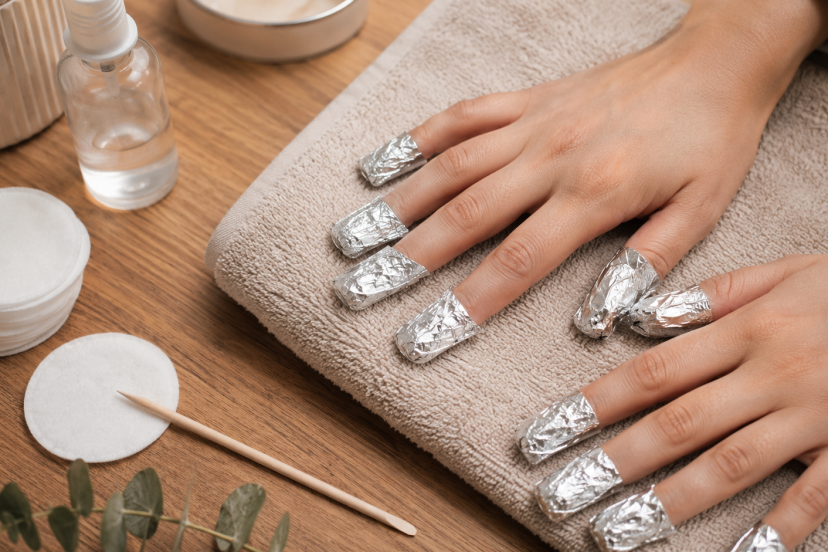
Secure the acetone-soaked cotton with foil, plastic wrap, or reusable nail clips. The cotton should stay firmly against the nail so the gel can soften evenly.
When removing gel polish at home, handle one hand first so you can work more neatly and keep better control. This helps keep the removal process cleaner and easier to manage.
Step 5: Wait 10 to 15 Minutes
Let your nails soak for 10 to 15 minutes. Then remove one wrap or clip to check the polish. If the gel looks lifted, cracked, or softened, it is ready to remove.
If the gel still appears firm or tightly attached, wrap the nail again and let it sit for another 5 minutes. Avoid pulling or scraping it off, as this can weaken the natural nail.
What to Do After the Gel Softens
Gently Push Off Loosened Polish
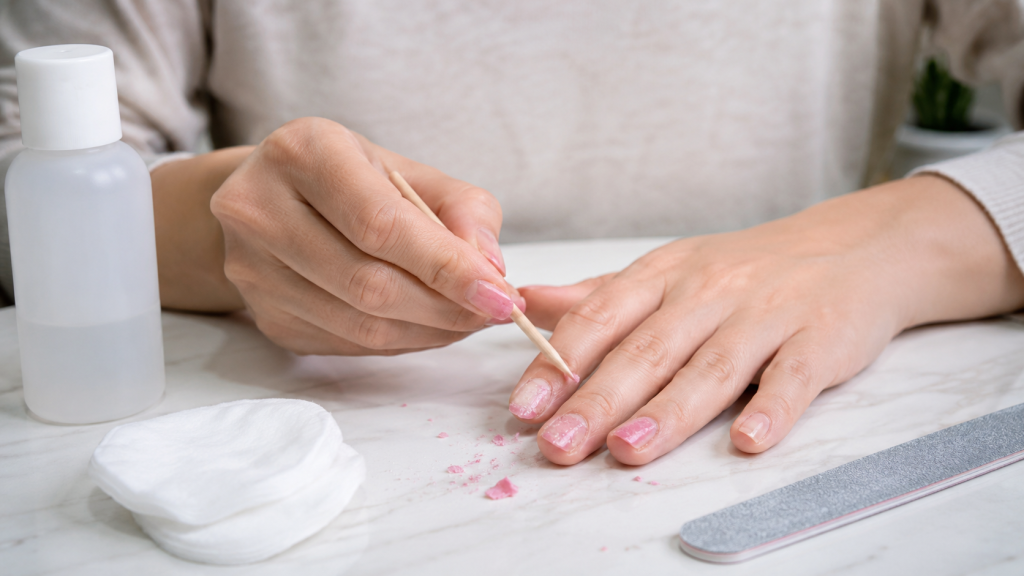
Once the gel has softened, use a wooden cuticle stick or gentle pusher to slide off the loosened polish. Use very light pressure. The gel should flake away without a fight. If you have to dig, scrape, or push hard, the polish is not ready yet. Re-soak stubborn nails instead of bullying them. Your natural nail plate is not a countertop. Treat it gently.
Buff Only If Needed
After the gel comes off, you may see a little residue. Use a soft buffer lightly to smooth the surface. Do not over-buff. Too much buffing can thin the nail, especially after acetone has already dried it out. A few gentle passes are enough.
Wash Your Hands
Wash your hands with mild soap and water to remove acetone residue. Gently pat your hands dry with a towel instead of rubbing them roughly. Then move straight into aftercare while your nails are clean and ready for moisture.
How to Care for Nails After Gel Removal
Apply Cuticle Oil
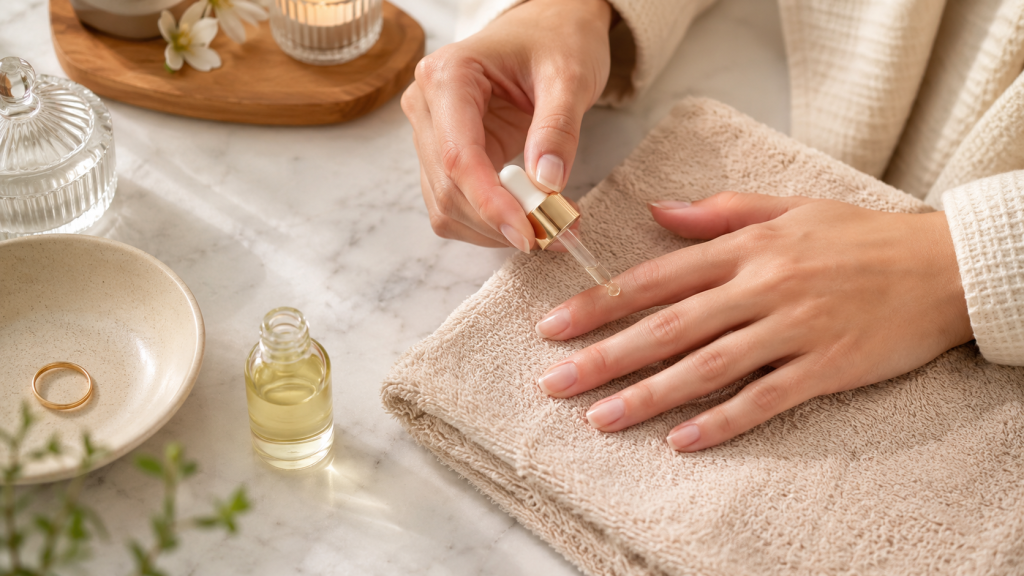
Cuticle oil is your best friend after gel removal. Rub a small drop of oil over each nail, then work it gently around the cuticle line. This helps reduce that dry, tight feeling acetone can leave behind. It also keeps the surrounding skin softer, which makes your nails look healthier even when they are bare. Continue using cuticle oil every day for several days after removal. If your nails feel extra dry, apply it morning and night.
Use a Rich Hand Cream
Follow with hand cream to lock in moisture. Acetone can dry out both nails and skin, so this step matters. Look for a cream that feels nourishing but not so greasy that you avoid using it. The best hand cream is the one you will actually reach for.
Keep Nails Short for a Few Days
If your nails feel weak after removal, trim them slightly shorter. Shorter nails catch less on hair, fabric, and random tiny things that somehow become nail traps. File the edges smooth so they do not snag.
Take a Short Gel Break
If your nails look thin, peeled, or bendy, give them a break before your next gel manicure. A week or two of bare nails, cuticle oil, and gentle care can make a big difference.
You can still have fun with regular polish or easy nail art during this break. If you want a playful design that does not require another gel set right away, try these cute polka dot nail designs for simple nail art inspiration.
Conclusion
The easiest and safest way to take off gel nail polish is easy: hydrate, wait, and gently lift. Don’t peel. Take your time. Don’t use your nail file as a power tool. When you take the time to find out how to remove gel nail polish with patience, you are actually doing the natural nail beneath the polish a favor. A gentle soak-off, a light buffing, and lots of moisture may lend your nails the smoothness and strength needed for your next design. Your manicure is temporary, but your nails deserve care every single time.
FAQs
1. What is the safest way to remove gel nail polish at home?
The safest method is to lightly file the shiny topcoat, protect the skin with petroleum jelly, soak cotton in 100% acetone, wrap or clip it onto the nails, wait 10 to 15 minutes, and gently push off softened gel. If the polish resists, soak again instead of scraping.
2. Is it possible to remove gel nail polish without using acetone?
Most cured gel polish needs acetone for effective removal. Non-acetone removers usually work better on regular polish, not gel. If you cannot use acetone because of sensitivity or allergy, ask a nail professional for help.
3. How much time do gel nails need to soak in acetone?
Most gel manicures need about 10 to 15 minutes. Some thicker coats or glitter gels may need a few extra minutes. The polish should lift or flake before you try to remove it.
4. Why are my nails weak after removing gel polish?
Weakness can happen from peeling, over-filing, aggressive scraping, frequent gel manicures, or dryness from acetone. Keep nails short, use cuticle oil daily, moisturize often, and take a short break before applying another gel set.
5. Can I put gel polish back on right after removal?
It is possible, but it may not be the safest or most effective option. If your nails look healthy and strong, a new manicure may be fine. If they feel thin, sore, or peeling, give them time to recover before applying gel again.